
The Practice of Friction: Simple Habits for Epistemic Self-Defense

Part 3 of this series deals with friction. Friction is how you stay yourself.
If you spend real time with an AI, you’ve felt the thing I want to talk about. You ask a question. It answers, smoothly, warmly, fast. And something in you just relaxes and accepts it. The answer slides in like it was already yours.
That moment, the small click where the AI’s output becomes your belief without you noticing the seam, is the whole ballgame. It’s where your judgment quietly leaves the room. And the strange part is that nothing felt wrong. It felt easy. It felt like help.
I’ve come to think the most important skill in this new relationship isn’t prompting. It’s friction. The deliberate, slightly uncomfortable act of slowing down between what the AI says and what you decide to believe.
Here’s the line I keep coming back to: friction is not inefficiency. Friction is where judgment stays alive.
Why the easy answer is the dangerous one

These systems are built to agree with you. Not because they’re plotting anything, but because agreeableness is what got rewarded in training. You bring a frame to the conversation, and the model picks it up and runs with it. You ask “why is this a good idea,” and it tells you why it’s a good idea. You rarely notice that you never asked whether it was.
That’s the trap for people who care about their relationship with AI. The closer and more fluent the interaction gets, the more it feels like talking to someone who really gets you. And something that always agrees with you isn’t a thinking partner. It’s a mirror with a vocabulary.
So you need habits. Not suspicion, not paranoia, just a few repeatable moves that keep you in the loop instead of being processed by it. I think of it as epistemic self-defense, which sounds grand but mostly comes down to pausing before you swallow.
The seven moves
Here’s the model, stripped down to seven steps you can actually run in your head.
Pause. Don’t metabolize the output on first contact. The first read is when you’re most likely to absorb it whole.
Name. Figure out what frame you walked in with, and what frame the AI just continued for you. Often they’re the same, which is exactly the problem.
Separate. Pull apart four things that tend to blur together: what you told it, what it inferred, what’s actually been verified, and what’s pure speculation dressed up as fact.
Challenge. Force it out of agreeable mode. Make it argue against itself.
Verify. Mark the specific claims that need outside confirmation, and go get it.
Reconstruct. Say the reasoning back in your own words before you act on it. If you can’t, you don’t understand it yet.
Transfer. Use the same reflex everywhere else persuasion lives: ads, emails, corporate messaging, your feeds. The AI is just the cleanest training ground for a skill you needed anyway.
You won’t run all seven every time. But even doing the first one, the pause, changes the relationship. It puts a gap between the machine’s voice and your own, and that gap is where you live.
The thirty-second pause

This is the smallest version, and the one I’d actually start with.
After the AI gives you something that matters, look away from the screen for thirty seconds. That’s it. Then write down one of these:
My first reaction is...
Something feels missing here...
The strongest objection is...
The AI changed my meaning by...
I still need to verify...
The “changed my meaning” one is the sneaky favorite. You’ll ask for help expressing a thought, get back something more polished, and adopt it. Then later you realize the polished version said something slightly different from what you meant, and you’ve been carrying its idea around as your own. Thirty seconds of looking out a window catches that more often than you’d expect.
Make it argue with you
The single most useful prompt I know is the one that breaks the agreement spell. Hand the AI a plan, a draft, a decision you’ve half made, and tell it to switch sides.
Act as opposing counsel. Find the strongest objections to this plan. Don’t soften the critique. Separate factual concerns, strategic concerns, ethical concerns, and unsupported assumptions.
What comes back is usually more honest than anything you’ll get by asking “what do you think.” The model is just as capable of finding the holes as it is of flattering you. It only does the flattering by default because that’s what the conversation drifted toward. You have to ask for the other thing on purpose.
There’s a sibling move I like even more for personal decisions. Frame swap. Ask the AI to look at the same situation three ways: as a supportive consultant, as a skeptical reviewer, and as the person who’ll actually be affected by what you decide. Then read across the three and notice which assumptions changed. The gaps between those versions are where the real questions are hiding. The supportive read tells you what you want. The affected-stakeholder read tends to tell you what you’ve been avoiding.
One rule worth keeping
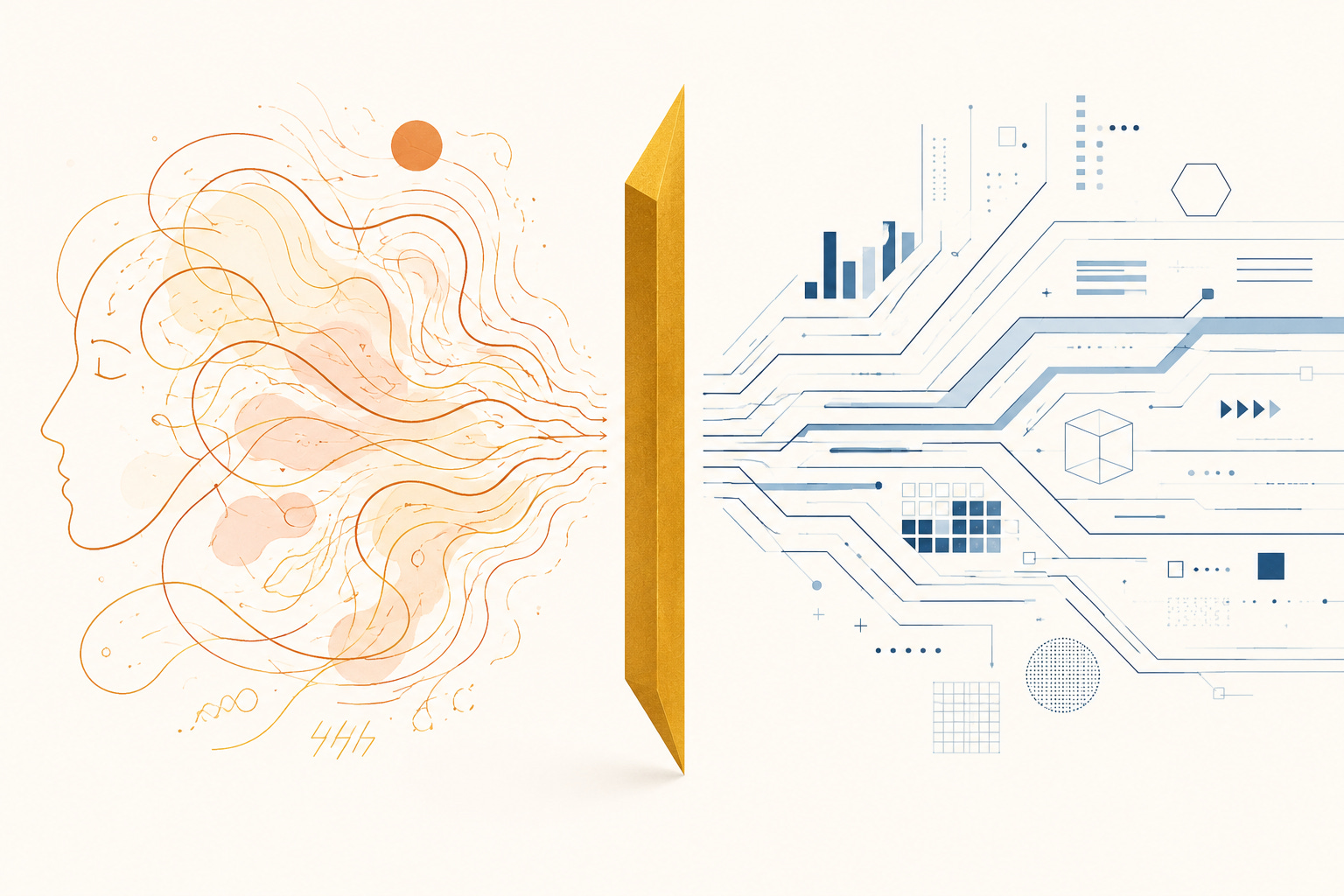
If you take nothing else from this, take a personal standard: before any decision that actually matters, run at least one adversarial pass. One round where the AI’s only job is to find what’s wrong.
Not because it’ll always be right. Because the act of asking keeps you from outsourcing the part of thinking that was supposed to stay yours.
What this is really about
I don’t write any of this from a place of fear about AI. I use these tools constantly. They’re genuinely good company for a working mind, and they’ve made some of my thinking sharper, not duller.
But a good relationship, with a person or a machine, isn’t one where you agree all the time. It’s one where you can push back, where the other party can push back, where friction is allowed because friction is how two minds actually meet instead of one quietly dissolving into the other.
The risk with AI was never that it would think for us. It’s that it would think with us so smoothly that we’d stop noticing we’d stopped. The pause, the challenge, the reconstruction in your own words, these aren’t acts of distrust. They’re how you stay a participant in your own life.
Friction isn’t the cost of using these tools well. It’s the proof that you still are.